Europe is one of the most exciting places to travel, and one of the hardest to plan. There are dozens of countries, hundreds of cities, and endless ideas about what a “perfect” trip looks like. Most first-time visitors are not short on inspiration. They are short on a clear starting point.
Here is the honest answer: there is no single best place. The right choice depends on a few things.
- Trip length: A week works very differently than two weeks.
- Budget: Costs vary a lot from Lisbon to London.
- Interests: History, food, art, beaches, or all of the above.
- Season: Crowds, weather, and prices shift throughout the year.
- Travel companions: Couples, families, and multigenerational groups want different things.
- Pace: Some travelers love a full schedule. Others want long lunches and free afternoons.
This guide walks through ten destinations that work especially well for a first European vacation: Paris, Rome, Florence, London, Barcelona, Amsterdam, Lisbon, Athens, Vienna, and Prague. Each one is easy to reach, easy to enjoy, and offers a strong mix of sights, food, and culture. After the city guides, you will find a comparison table, itinerary ideas, practical tips, and common mistakes to avoid.
Quick Answer: What Are the Best European Destinations for First-Time Visitors?
Paris, Rome, London, Barcelona, Amsterdam, Lisbon, Athens, Vienna, Prague, and Florence are among the best choices for first-time visitors. They have strong airline connections, good public transportation, English-friendly tourism services, and world-famous sights. The best pick depends on your interests, budget, season, and how much time you have.
10 Best Places to Visit in Europe for First-Time Visitors
1. Paris, France
Why visit: Paris delivers the Europe many people picture: cafe terraces, grand boulevards, world-class museums, and pastry on every corner. It is also very easy to navigate for a first-timer.
Best for: First-time travelers, couples, honeymooners, food lovers, and art lovers.
Top experiences:
- The Louvre and the Musée d’Orsay
- The Eiffel Tower, ideally with a timed ticket or a picnic nearby
- A stroll through Montmartre and Le Marais
- Day trip to Versailles or Giverny
How long to stay: Plan 4 to 5 days. You can see the highlights in three, but a day trip and slower meals make the visit far more enjoyable.
Getting around: The Metro is fast and covers the city well. No car needed.
Best time to visit: April to June and September to October bring mild weather. July and August are busier and warmer.
Travel tip: Book major museums and the Eiffel Tower in advance. Sold-out time slots are the most common frustration for first-timers here.

2. Rome, Italy
Why visit: Rome puts thousands of years of history right on the street. You can walk from an ancient arena to a Renaissance fountain to a neighborhood trattoria in one afternoon.
Best for: History lovers, food lovers, families with older kids, and first-time travelers.
Top experiences:
- The Colosseum, Roman Forum, and Palatine Hill
- Vatican Museums and St. Peter’s Basilica
- Trevi Fountain and the Pantheon, best early in the morning
- A food tour in Trastevere or Testaccio
How long to stay: 3 to 4 days. Rome is packed with sights, and the summer heat can slow you down.
Getting around: The historic center is walkable. Use the Metro, buses, or taxis for longer distances.
Best time to visit: Spring and fall. Summer can be very hot.
Travel tip: Reserve Vatican and Colosseum entry ahead of time, and pack shoulders-and-knees-covering clothing for churches.

3. Florence, Italy
Why visit: Florence is compact, beautiful, and packed with Renaissance art. It also works as an ideal base for exploring Tuscany.
Best for: Art and culture, couples, food and wine lovers, and travelers who like a walkable city.
Top experiences:
- The Uffizi Gallery and the Accademia, home of Michelangelo’s David
- The Duomo and its surrounding sights
- Sunset views from Piazzale Michelangelo
- A Tuscan countryside day trip with wine tasting
How long to stay: 2 to 3 days in the city, plus a day for the countryside if you can.
Getting around: Most sights are within walking distance. High-speed trains connect Florence with Rome, Venice, and Bologna.
Best time to visit: April, May, and September through October.
Travel tip: Wear comfortable shoes. The historic streets are stone, and you will walk more than you expect.
4. London, England
Why visit: London is one of the easiest places in Europe for North American travelers. There is no language barrier, the transit system is excellent, and the city mixes royal history with a lively food and theater scene.
Best for: First-time international travelers, families, theater fans, and history lovers.
Top experiences:
- The Tower of London and Westminster Abbey
- The British Museum, which has free general admission
- A West End show
- Afternoon tea and a stroll through the city’s parks
How long to stay: 4 to 5 days.
Getting around: The Tube, buses, and rail network are easy to use. Contactless payment works on most public transit.
Best time to visit: May through September has the longest days. Winter is quieter and festive, though often gray.
Travel tip: Leave room in your budget. London is generally one of the pricier European cities for lodging and dining.
5. Barcelona, Spain
Why visit: Barcelona offers city sightseeing and beach time in one place. Gaudí’s architecture, tapas culture, and late-night energy give it a personality all its own.
Best for: Food lovers, couples, families, and travelers who want culture plus beach time.
Top experiences:
- Sagrada Família and Park Güell
- The Gothic Quarter and El Born
- La Boqueria market and a tapas crawl
- Beach time in Barceloneta
How long to stay: 3 to 4 days.
Getting around: The Metro is simple, and many areas are walkable.
Best time to visit: May, June, and September. Summer is hot and busy.
Travel tip: Spaniards eat late. Dinner often starts after 8:30 p.m., so adjust your schedule or plan a bigger lunch. Readers who want to see more of the country can explore our Spain travel guide.
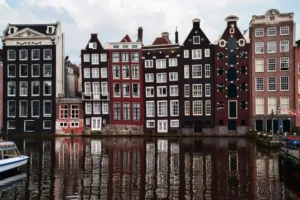
6. Amsterdam, Netherlands
Why visit: Amsterdam is small, friendly, and easy to love. Canals, cycling, and museums make it a relaxed introduction to Europe.
Best for: Couples, art lovers, shorter trips, and travelers who prefer a manageable city.
Top experiences:
- The Rijksmuseum and Van Gogh Museum
- A canal cruise
- The Anne Frank House, with tickets booked well ahead
- A day trip to windmills or tulip country in spring
How long to stay: 2 to 3 days.
Getting around: Trams and walking cover most of what you need. Watch for bikes, which have priority in many places.
Best time to visit: Spring for tulips, or late spring through early fall for pleasant weather.
Travel tip: Popular attractions sell out. Book your key tickets as soon as your dates are set.
7. Lisbon, Portugal
Why visit: Lisbon is relaxed, colorful, and often more affordable than many Western European capitals. It offers hills, tiled buildings, great seafood, and easy day trips.
Best for: Budget-conscious travelers, food lovers, couples, and travelers who want a slower pace.
Top experiences:
- Alfama’s winding streets and viewpoints
- Belém Tower and Jerónimos Monastery
- Pastel de nata tasting
- Day trip to Sintra or the coast
How long to stay: 3 to 4 days.
Getting around: Trams, Metro, and rideshares help with the hills.
Best time to visit: Spring and fall.
Travel tip: Bring shoes with good grip. Polished cobblestones can be slippery. Our Portugal travel guide covers more of the country.

8. Athens, Greece
Why visit: Athens is where much of Western civilization began. It also works as a launch point for the islands, so it pairs well with beach time.
Best for: History lovers, couples, and travelers combining city and island time.
Top experiences:
- The Acropolis and the Acropolis Museum
- The Plaka neighborhood and the ancient Agora
- A food tour or rooftop dinner with Acropolis views
- Day trip to Cape Sounion
How long to stay: 2 to 3 days before heading to the islands.
Getting around: The Metro is easy, and central areas are walkable.
Best time to visit: April to early June and September to October. Midsummer can be very hot.
Travel tip: Visit the Acropolis early in the day to avoid heat and lines. When you are ready for the islands, see our Greek Isles travel guide.
9. Vienna, Austria
Why visit: Vienna is elegant, clean, and easy to navigate. Imperial palaces, classical music, and coffeehouse culture make it a favorite for travelers who prefer refinement over frenzy.
Best for: Luxury travelers, music lovers, couples, and travelers who value comfort.
Top experiences:
- Schönbrunn Palace and the Hofburg
- A classical concert or opera performance
- Coffeehouse time with Viennese pastries
- A Danube or Wachau Valley excursion
How long to stay: 2 to 3 days.
Getting around: Public transit is efficient and easy to use.
Best time to visit: Spring, early fall, and the Christmas market season.
Travel tip: Vienna pairs well with Prague and Budapest by train, and it is a common stop on Danube river cruises.
10. Prague, Czech Republic
Why visit: Prague has a storybook Old Town, a hilltop castle, and a lower price point than many Western European capitals. It is very walkable and photogenic.
Best for: Budget-conscious travelers, couples, history lovers, and shorter trips.
Top experiences:
- Old Town Square and the Astronomical Clock
- Charles Bridge at sunrise
- Prague Castle
- Beer hall dinner and a river evening cruise
How long to stay: 2 to 3 days.
Getting around: Trams and the Metro are simple, and the center is compact.
Best time to visit: Spring, early fall, or December for the Christmas markets.
Travel tip: Charles Bridge gets crowded by mid-morning. Go early for the best photos and a calmer walk.
Also worth considering: Dublin offers easy English-language travel and lively pub culture. Munich is a strong choice for beer halls, castles, and Bavarian Alps day trips.

Comparison Table: Which Destination Fits Your Trip?
| Destination | Best For | Recommended Stay | Travel Style | Best Time to Visit |
|---|---|---|---|---|
| Paris | Couples, art, food | 4–5 days | Classic and romantic | Apr–Jun, Sep–Oct |
| Rome | History, food | 3–4 days | Busy and rewarding | Apr–May, Sep–Oct |
| Florence | Art, wine | 2–3 days | Walkable and cultural | Apr–May, Sep–Oct |
| London | First-time international travelers, families | 4–5 days | Easy and varied | May–Sep |
| Barcelona | Food, beach, architecture | 3–4 days | Lively and relaxed | May–Jun, Sep |
| Amsterdam | Couples, short trips | 2–3 days | Compact and cozy | Apr–Sep |
| Lisbon | Budget, food | 3–4 days | Slow and scenic | Mar–May, Sep–Oct |
| Athens | History, islands | 2–3 days | Historic with island access | Apr–Jun, Sep–Oct |
| Vienna | Luxury, music | 2–3 days | Elegant and refined | Apr–Jun, Sep, Dec |
| Prague | Budget, history | 2–3 days | Charming and walkable | Apr–Jun, Sep, Dec |
How to Choose the Right European Destination for Your First Trip
- History lovers: Rome and Athens.
- Food lovers: Rome, Florence, Barcelona, and Lisbon.
- Couples: Paris, Florence, and Amsterdam. Our romance travel ideas offer more inspiration.
- Families: London, Rome, and Barcelona, where sights, parks, and beaches keep kids engaged. See our multi-generational travel guide for larger groups.
- First-time international travelers: London and Paris, thanks to straightforward transit and strong tourist infrastructure.
- Luxury travelers: Paris, Vienna, and Florence. You may also enjoy luxury train travel.
- Art and culture: Florence, Paris, and Amsterdam.
- Beaches and relaxation: Barcelona, Lisbon, and Athens combined with the Greek islands.
- A shorter trip: Amsterdam, London, or Paris. Each rewards a few days.
- Combining countries: Rome, Florence, and Venice by train, or Vienna and Prague.
Best European Destinations for Different Trip Lengths
3 to 4 days: Choose one city. Paris, London, Rome, or Amsterdam all work.
5 to 7 days: Choose one country or two nearby cities, such as Paris and Amsterdam, or Rome and Florence.
8 to 10 days: Add a third stop or a day trip region. Rome, Florence, and Venice is a classic choice.
10 to 14 days: Explore one country in depth or two neighboring countries. Spain or Italy both work well. Aim for no more than three or four bases.
First-Time Europe Itinerary Ideas
Treat these as starting points, not strict blueprints. Every traveler is different, and fewer stops usually mean a better trip.
- 7 days, Paris and Amsterdam: 4 nights Paris, 3 nights Amsterdam, connected by high-speed train.
- 10 days, Rome, Florence, and Venice: 4 nights Rome, 3 nights Florence, 3 nights Venice, all reachable by train.
- 10 days, London and Paris: 5 nights London, 5 nights Paris, with the Eurostar train between them.
- 14 days, Spain: Barcelona, Madrid, and either Seville or Granada, with high-speed rail or short flights between stops.
- 14 days, Italy: Rome, Florence with a Tuscany day trip, Venice, and either the Amalfi Coast or Lake Como.

Europe Travel Tips for First-Time Visitors
- Time per stop: Stay at least two to three nights in each location. Constant packing wears you out.
- Trains: Often the easiest option between nearby major cities. Book popular routes ahead for better fares.
- Flights: Useful for longer distances. Check baggage rules with budget airlines, since fees can add up.
- Public transportation: Learn the basics of the local Metro or tram system before you arrive.
- Accommodations: Book early for peak season, and choose a central, walkable neighborhood.
- Travel insurance: Consider coverage for trip cancellation, medical needs, and delays.
- Passport and entry requirements: Check your passport validity and current entry rules well before departure. Requirements change, so confirm them with official government sources.
- Money: Most of Europe uses the euro, though the U.K., Czech Republic, and a few others use their own currencies. Carry a credit card with no foreign transaction fees and a little cash.
- Tipping: Usually lower than in the U.S. Check local customs, since service charges are sometimes included.
- Shoes: Pack comfortable, broken-in walking shoes. Many travelers walk several miles a day.
- Restaurant reservations: Book popular places in advance, especially for dinner in peak season.
- Tourist seasons: Shoulder season (spring and fall) often means smaller crowds and better weather.
- Connectivity: Look into an eSIM or your carrier’s international plan.
- Local apps: Google Maps, Citymapper, Trainline, and local rideshare apps can save time.
- Downtime: Leave room for wandering. Some of the best travel moments are unplanned.
For more ideas on avoiding pitfalls, read our guide to mistakes to avoid when planning an international vacation.
Common Mistakes First-Time Europe Travelers Make
- Trying to see too many countries. More stamps do not equal a better trip.
- Changing hotels every night. Transit days eat up your vacation.
- Underestimating travel time. Airports, stations, and bag handling add up.
- Booking too late. Popular tickets, trains, and hotels can sell out.
- Ignoring shoulder season. Spring and fall are often more comfortable.
- Skipping transportation research. Know how you will get from the airport to your hotel.
- Overpacking. You will carry your bag on trains, stairs, and cobblestones.
- Skipping travel insurance. Costly surprises can happen far from home.
- No downtime. A packed schedule can leave you exhausted.
- Ignoring travel style. A fast-paced city may not suit a traveler who wants a relaxed trip.
Should You Plan Europe Yourself or Work With a Travel Advisor?
Both approaches can work. Planning it yourself gives you total control, and it can be a rewarding process if you enjoy research and have flexible time. The trade-off is time and the risk of missing details, like timed-entry rules, train logistics, or seasonal closures.
A travel advisor can be especially helpful when your trip is more complex. That includes:
- Multi-country itineraries
- Honeymoons and milestone celebrations
- Luxury travel
- Family and multigenerational trips
- Cruises, including river cruises
- Trips that combine several transportation types
An advisor can also support you if something changes before or during your trip. If you are weighing your options, our article on reasons to use a travel advisor explains how the process works. If a cruise is on your radar, compare river cruise vs. ocean cruise options.
Frequently Asked Questions
What is the best European country to visit for the first time?
There is no single best country. Italy, France, Spain, and the U.K. are popular first choices because they offer famous sights, strong transportation, and plenty of variety. Italy suits history and food lovers, France suits art and romance, Spain suits beaches and nightlife, and the U.K. is the easiest for English speakers.
How many days do you need for a first trip to Europe?
Seven to ten days is a comfortable starting point for one or two destinations. Ten to fourteen days lets you explore a country in more depth or add a third stop. Shorter trips work well when focused on a single city.
What are the easiest European cities to visit without a car?
Paris, London, Amsterdam, Vienna, Prague, and Rome are all easy without a car. They have reliable public transit, walkable centers, and taxis or rideshares. A rental car is often more of a burden than a help in these cities.
What is the best time of year for a first trip to Europe?
Spring (April to June) and early fall (September to October) are popular. Weather is generally pleasant, and crowds are usually smaller than in midsummer. Winter can be lovely for Christmas markets, but days are short and some attractions have reduced hours.
Should I visit one country or multiple countries on my first Europe trip?
For a first trip, one country or two nearby countries is often the best approach. It reduces transit time and lets you enjoy each place. Keep multi-country trips to a manageable number of stops.
What is the easiest way to travel between European countries?
Trains are often the easiest option for nearby major cities because they go center to center. For longer distances, short flights can save time. Compare the total journey, including airport time, before deciding.
How much should I budget for a first trip to Europe?
Costs vary widely by destination, season, hotel level, and travel style. Western capitals like London and Paris tend to cost more than cities like Lisbon or Prague. A good approach is to price flights, lodging, and major activities first, then add a daily allowance for food and local transit.
Is Europe easy to travel around for first-time visitors?
Yes, especially in popular cities. Europe has extensive rail networks, good public transit, and strong tourism services. English is widely spoken in tourist areas. A little planning around tickets, transportation, and timing makes the trip much smoother.
Ready to Plan Your First Trip to Europe?
Planning your first trip to Europe can feel overwhelming, but you don’t have to figure it all out alone. If you’d like help choosing the right destinations, building a realistic itinerary, and making the most of your time, the Simply Inspired Travel team can help.
Michele Wirth and the Simply Inspired Travel team can create a personalized European itinerary that fits your interests, pace, and budget. Contact our team or schedule a consultation to get started.